
Shipping
We ensure all customers’ vehicles are shipped on the first available vessel and at the lowest possible rate.
We deal with a number of reputable shipping companies. We ensure that shipping arrangements are processed quickly and at the lowest possible price. Vehicles are booked on the first available vessel.
SHIPPING INFORMATION
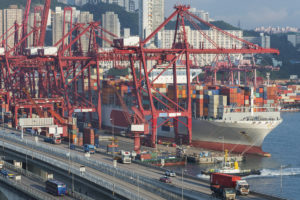
After successfully purchasing a vehicle, it is then transported to a temporary holding area close to a shipping port before being shipped. After this, the vehicle is transported to a shipping port and put onto a shipping vessel heading to its desired port of destination. Cars can be shipped from one of many ports throughout Japan, including the Yokohama, Kobe, Osaka, Nagoya, and Kyushu regions. Most of the auction sites are close to a shipping port. This makes transporting vehicles from auctions to shipping ports very quick and cost effective.
For most vehicle shipments, two choices are generally available. These are:
- RORO Shipping (known as Roll-on Roll-off Shipping)
- Container Shipping
We generally recommend RoRo shipping whenever possible due to its overall cost and efficiency. However, for some ports RoRo is not available so customers must use Container Shipping.
RORO Shipping
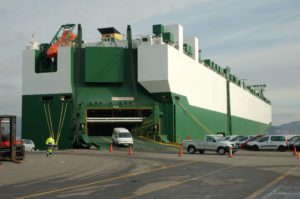
RoRo shipping was pioneered by the Japanese vehicle industry. By using vehicle carrier-type ships, vehicles can be shipped quickly and efficiently to many countries. Vehicles are simply driven onto (rolled on) a vessel at their point of departure in Japan and driven off (rolled off) at their destination.
Compared to container shipping, the overall shipment procedure is simple. All vehicles are lined up at a dock in preparation for loading onto the vessel. Then, workers begin to systematically drive the vehicles onto the vessel. Once inside, vehicles are secured to the car decks and kept inside until they arrive at the designated port for delivery. This method of shipping is usually the safest and most cost-effective way to ship cars and often the only choice for oversized vehicles.
The cost of RORO shipping (Freight costs) is calculated by taking a vehicle’s cubic meters (m³) measurement and multiplying this by a U.S. dollar freight amount. A vehicle’s m³ is calculated by multiplying its height by its length by its width. The set freight amount for a given vehicle is calculated in single units based cubic meters. This rate varies according to the country of destination.
To illustrate, for example, the m³ for a Hybrid Honda Fit (GP1) is calculated by multiplying the following:
| Car Type | Height | Length | Width | Total m³ |
| Honda Fit Hybrid (GP1) | 1.52 | 3.90 | 1.69 | 10.02 |
To get the vehicle’s m³ total we multiply 1.52 X 3.90 X 1.69 = 10.02.
If the vehicle was being shipped to Kenya, for instance, the car’s m³ (10.02) is multiplied by the set freight amount. The set freight amount for shipping to Kenya is currently $65 per m³. To get the shipping total, we multiply 10.02 X 65 = $651.
Container Shipping
Container shipping is part of an intermodal freight transport system and is another viable option for shipping vehicles. In cases of purchasing and shipping multiple vehicles simultaneously, container shipping may offer some advantages and be the preferred choice. Also, some ports don’t accommodate RORO shipping and if a vehicle is not in running condition, container shipping may be the only choice for shipping.
Containers are known as intermodal or shipping containers and are usually composed of steel or aluminum with standardized dimensions. The main advantage of container shipping is that they can be transported and transferred from one mode of transport to another easily without being opened. Vehicle handling with containers is done with cranes and specialized forklifts. Once a vehicle is inside the container, the doors are not opened until arrival at the designated port. Containers are numbered and tracked using a computerized system.
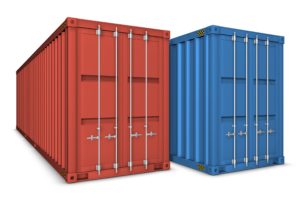
The three most common sizes for shipping containers are 20 ft., 40 ft., and 40 ft. High Cube containers. A 20 ft. container can hold a maximum of 2 cars. A 40 ft. container’s capacity is a maximum of 5 or 6 small sized cars and 3 or 4 larger cars. With container shipping there are also some additional costs. For example, there are fees for loading and securing a vehicle inside a container. However, the potential savings on freight for container shipping can often outweigh these extra costs.
Please contact us if you are considering container shipping as each case varies depending on a variety of factors. We will be pleased to advise you of your options and the best way to ship your vehicle.
Note: currently, due to a variety of factors, container shipping costs are very high. Please be sure to contact us for the most current prices.
Get In Touch
+81 90 6467 3672
+81 80 6178 0709
Location
Kuwazu 3 Chome 5-3-6
Itami-Shi, Hyogo
Japan 664-0839
sales@japanautoconnect.com
Details
Japan Auto Connect is one of the most experienced Japanese car exporters serving customers globally.